Markets / Healthcare
The Drug That Decides Where to Work
The Moderna and Merck has shown that mRNA can fight cancer one patient at a time. The question now is whether one drug can do it for everyone.
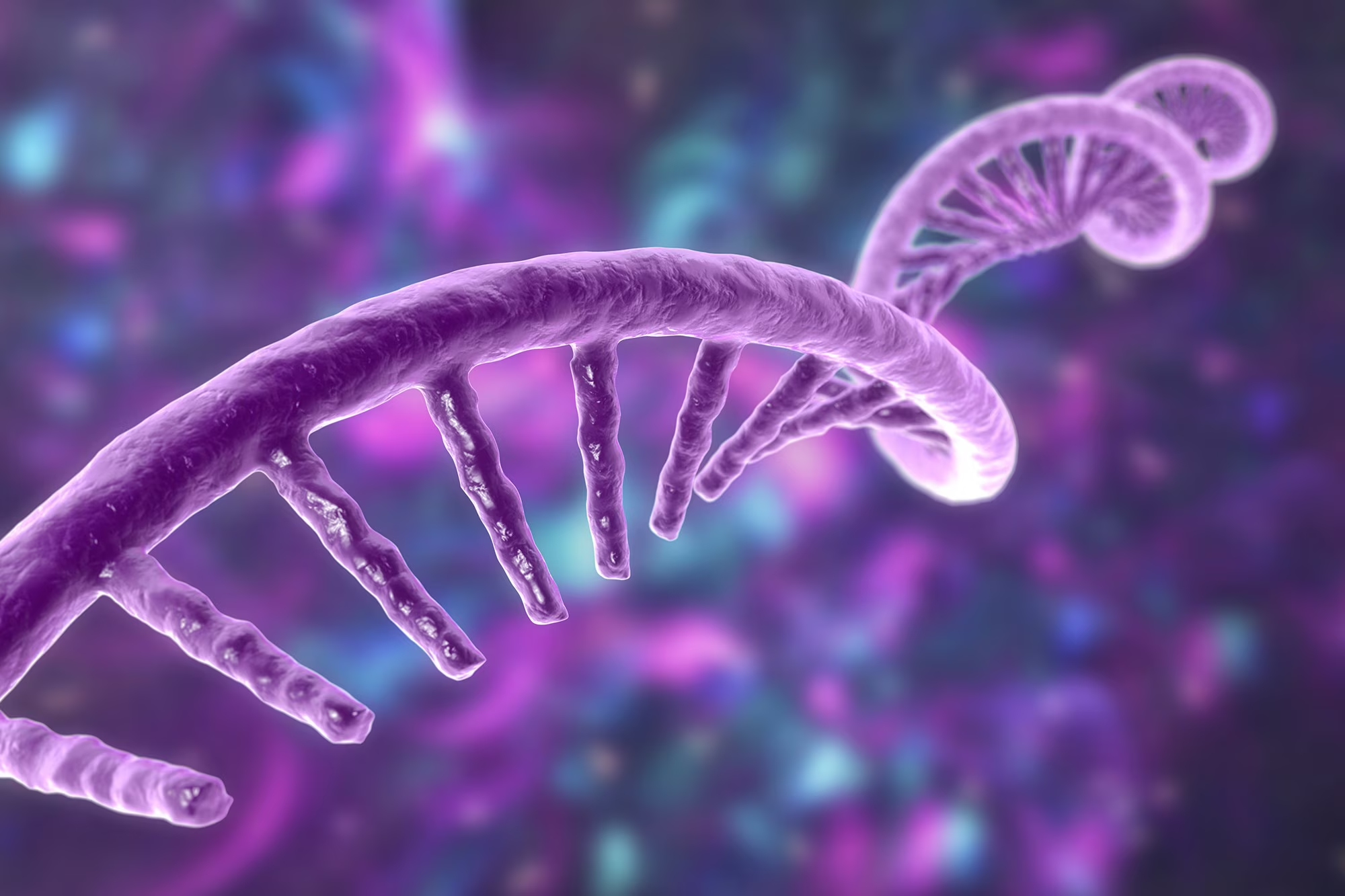
Biopharma and healthcare industries are strewn with creative solutions that target the many diseases that plague our society. Whether it is as simple as a flu vaccine every college student needs or targeted therapy to prevent cancer spread, there’s a variety of pharmaceutical solutions that have and will be developed through the coming years. However, the main problem that arises is the “one-size-fits-all" limitation of traditional medicine. For example, two patients can have the exact same type of cancer, but their tumors will feature entirely different genetic mutations. Traditional treatments often fail because they target broad characteristics rather than a patient's specific tumor profile. This is where therapies such as customizable mRNA solutions come in. They can be rewritten for each patient, built from the mutations in a single tumor and designed to teach the immune system to hunt cells that no other body contains. The most advanced and recent example is the Moderna and Merck personalized mRNA cancer vaccine that although is still in Phase 3, opened up a potentially new and effective solution to tackling melanoma that relies heavily on personalized and precision medicine. However, another problem arose on how these medicines are a “one drug per patient” solution. Consequently, a new type of customizable mRNA solution that tackles this problem are programmable mRNA solutions, which unlike personalized mRNA, do not need to be rebuilt for every patient.
Programmable mRNA solutions are medicines that use synthetic messenger RNA molecules as software-like code to instruct a patient's own cells to produce specific therapeutic proteins or antigens. Compared to personalized mRNA, that is rewritten for every patient, programmable mRNA is written once and decides where to act. For example, melanoma, a dangerous type of skin cancer, can act as intruders that the immune system doesn’t recognize. The vaccine created by Moderna and Merck is a pinpointer uniquely made from the patient’s own tumor. On the other hand, programmable mRNA solutions are alarms that stay quiet until it detects an anomaly, secreting cytokines to summon the immune system and interestingly enough, they can be used for more than one patient.
As of now, mRNA startups are focused on durability. What this focuses on is how conventional linear mRNA degrades within hours inside human cells, which works well for one-off vaccines but is useless for treating chronic genetic diseases, cancer, or tissue regeneration. As a result, two fixes have emerged, which are Orna’s circular RNA that resists degradation or Replicate Bioscience’s self-amplifying RNA that copies itself inside the cell. Both make the protein last longer or let the patient dose less. However, neither changes the issue of where the drug acts and how the drug still works everywhere it lands. As a result, a few startups are focused on a risky bet on logic, or building biosensors into the strand so that it only translates into a protein if it encounters a highly specific cellular environment such as a tumor. One such example that is attempting to make these solutions viable for human use is Strand Therapeutics, the furthest pure play in this specialized field.
Strand Therapeutics, originally born as an idea from MIT, is a clinical-stage biotechnology company with a pipeline of breakthrough mRNA therapeutics for cancers and autoimmune diseases. Their business model revolves around two key products. The first of which is the lead candidate and most developed. STX-001 is currently being evaluated as a Phase 1/Phase 2 drug for human clinical trials. It acts as a self-replicating mRNA injected directly into tumors that expresses IL-12, one of the immune system’s most powerful anti-tumor signals, locally in the tumor microenvironment. It’s shown its success in a small but telling set of patients. Fourteen were enrolled across four dose levels. The result that matters came from a melanoma subgroup of five, all of whom had already failed two or three immunotherapy regimens. Three saw tumors shrink in lesions that were never injected. In one, the cancer disappeared entirely. A drug placed in a single tumor had taught the immune system to find the rest. On the other hand and as a more recent creation, STX-003 is an intravenously administered version carrying liver-avoidance logic circuits, so it can be given systemically rather than injected into a tumor. However, this is still in its pre-clinical trial phase and is not as reliable as STX-001. What makes these drugs potential medical breakthroughs in the new generation mRNA solutions is how they revive a drug the field gave up on. IL-12 is one of the body’s most powerful signals for rousing the immune system against cancer, but being injected into the bloodstream poisons the patient along with the tumor. STX-001 makes the tumor produce it on the spot, so the effect stays local. The catch is that a doctor has to reach the tumor with a needle, which rules out most cancers of the pancreas, lungs and brain. STX-003 is the bigger bet. Injected into a vein, it has to find the tumor by itself, slipping past the liver and switching on only once it reads the right chemical signature. If that works, any drug too toxic to give freely becomes usable.
However, every medical breakthrough has a riskier side to it. The furthest in Strand Therapeutic’s product line, STX-001, rests on three patients out of five, and signals that size rarely survive a larger trial. The complete response came at a moderate dose, not the highest tested, which leaves the dose-response relationship unexplained. Not only that, but the drug must still reach the tumor by needle. STX-003 carries the heavier risk. Lipid nanoparticles drift to the liver by default, and IL-12 produced there is precisely the toxicity that killed the molecule three decades ago when they first attempted this solution.
Ultimately, the new generation of mRNA solutions is the breeding ground for medical breakthroughs to sprout out and make a significant impact in the world. Whether their product line hinges on durability or logic, programmable mRNA solutions pose a question medicine has always faced: not what a drug can do, but where it does it. Strand’s answer is that the molecule should work that out for itself. However, time will only tell whether this product can be used for human consumption. We must watch STX-003’s safety data in 2027. If the liver stays quiet, the field has a new breakthrough, and if not, there is still work to be done.